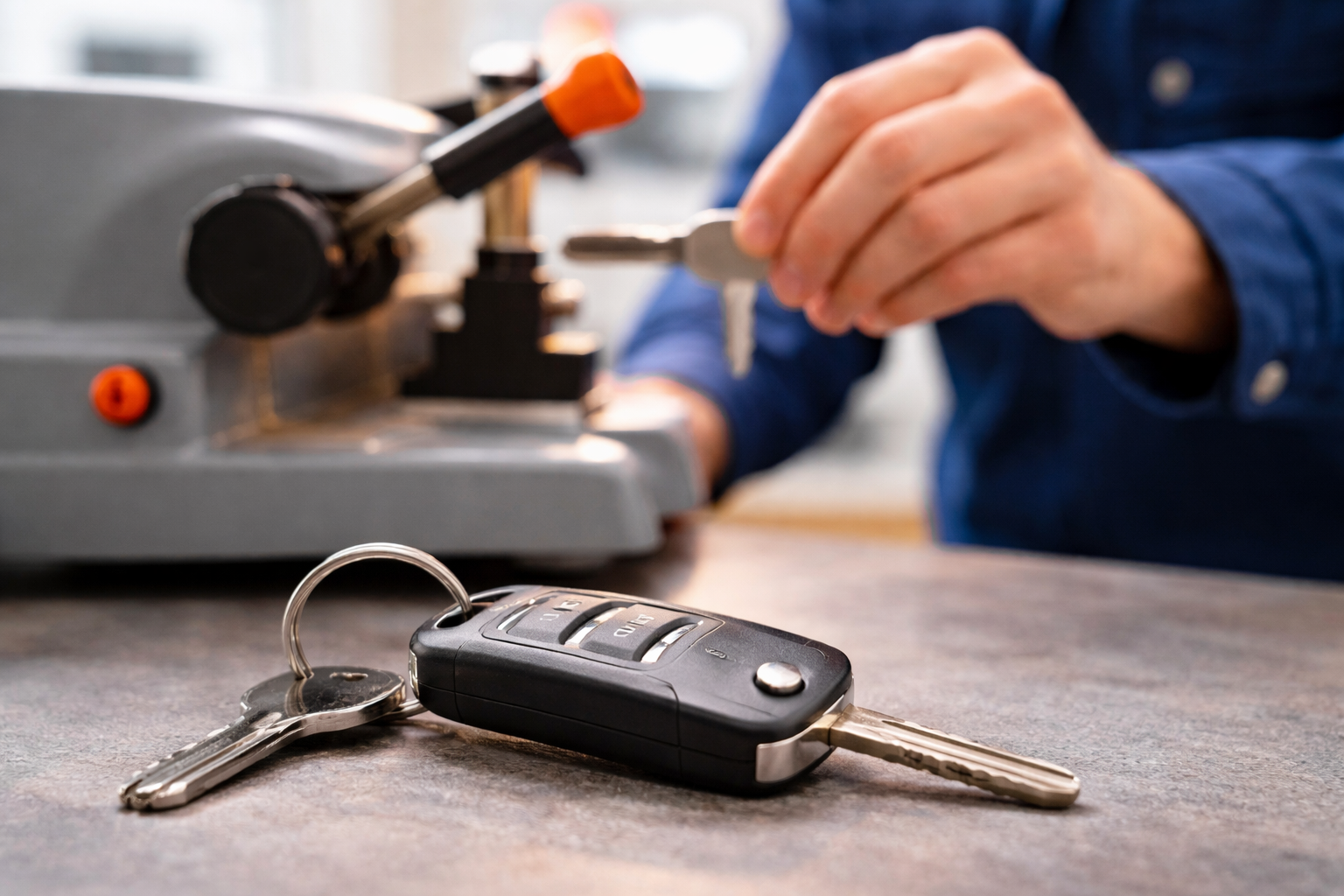
When a car key starts to wear out, it usually gives off clear signs before it breaks completely. We often ignore those signals because the key still works. However, once it snaps off in the ignition or door, it turns into a stressful problem. In this post, we’ll go over the most common warning signs and what steps can help avoid a full break. Our team at Your Key Maker handles these situations every day, so we know what to look for and how to fix things fast.
Key Feels Loose Inside the Ignition or Lock
Most car keys should slide in and turn smoothly. If a key starts to wiggle or feels like it’s not sitting properly inside the ignition or door lock, that’s usually a red flag. This small movement might seem harmless at first. However, it often means the key’s teeth are wearing down or the grooves are starting to flatten.
As a result, turning the key puts pressure on weakened metal. Over time, that extra stress makes the key more likely to bend or snap during use. We recommend watching for this issue if your key takes more than one attempt to turn or if you feel slight resistance. At this point, a qualified automotive locksmith in Ottawa can examine both the key and the cylinder before it becomes worse.
Visible Cracks or Bends on the Key Blade
Any visible damage on the metal part of your car key means trouble. We often see cracks forming right where the key meets the plastic head. That area takes a lot of pressure every time the key turns in the ignition. Small lines or bends are early signs that the metal is close to giving out.
Sometimes, keys that have been dropped or stepped on show slight warping. If you notice even a minor bend, avoid using the key any further. Driving with it could lead to the blade snapping inside the ignition. At that point, professional broken key extraction in Ottawa becomes necessary to remove the stuck piece safely.
Ignition Turns Harder Than Usual
Ignitions don’t just wear down; keys do as well. If it suddenly takes more force to turn the car on, the issue might be with the key, not the ignition. Over time, small metal pieces grind down or shift slightly. This leads to a poor fit and less grip between the key and the internal tumblers.
We’ve seen drivers force the key harder each day until it finally breaks. That extra torque only speeds up the damage. A key that used to turn easily but now feels stiff is warning you early. Don’t try to lubricate the ignition or wiggle the key roughly. Instead, it’s better to test a spare key, and if that works better, get the damaged one replaced.
Key Works in One Lock but Not Another
Some cars use one key for both the door and ignition. When the key starts failing in one area but still works in another, the problem is likely with the key. For example, if it unlocks the door smoothly but struggles with the ignition, the wear is probably on the ignition-specific cuts.
This is a key signal to pay attention to. One of our clients thought their ignition was faulty, but the real issue was uneven wear on their key. We made a copy from their backup and avoided a more expensive repair. If this mismatch starts to happen, take both locks and the key in for inspection before it leads to a full break.
Frequent Use of Spare Keys or Copies
If you often rely on backup keys because your main one is “a bit off,” that’s a subtle sign something’s wrong. Spare keys are not just extras. They’re often slightly less precise than the original. When the main key starts to fail and we use copies more often, we unintentionally wear them all down faster.
Eventually, none of them work properly, and we’re left with no reliable key. We always advise customers to avoid using poorly cut copies from hardware stores. Instead, visit a licensed automotive locksmith in Ottawa to get precision-made keys before things get worse.
You Hear a Clicking or Snapping Sound While Turning
This sound means metal fatigue. If the key clicks or gives a brief snap sound when turning, it’s a clear warning. That sound comes from small shifts in the key blade as it bends slightly under tension. Even if the car still starts, the metal inside is under more strain than it should be.
Every click is a signal that something inside is about to give way. We’ve had many calls where drivers ignored this sound and the key finally broke while starting their vehicle in a rush. Once it snaps, a full ignition repair may be needed. Taking action early avoids both time and cost.
You Apply More Force Than Usual to Unlock the Door
Some signs show up in the locks rather than the ignition. If unlocking the door with the key becomes harder, or you have to jiggle it to make it work, the key could be losing its shape. We find that this happens most often in cold weather when metal contracts slightly.
Still, if the problem continues even in warm weather, your key may be worn or slightly bent. Keeping it in a tight pocket or keychain can also contribute to the bending. We advise people to switch to remote access if available or consider replacing the key while it still functions occasionally.
Your Remote Key Shell Is Damaged or Loose
For cars with remote or chip keys, the physical shell plays a critical role. If the plastic casing becomes cracked, the pressure placed on the internal blade increases. Over time, this damages the connection point between the metal and plastic.
A loose or rattling shell also suggests that the blade is moving more than it should. The connection weakens slowly and eventually separates. If that happens during use, the blade can snap or fall out. A new shell is usually inexpensive and prevents a much bigger issue later.
You Notice Your Key Has Become Thinner or Sharper
This one is easy to miss. Keys that have been used for years gradually become thinner around the notches. They might even feel sharper to the touch. These areas are usually the first to fail. When we inspect them, we often find the metal worn almost flat at the stress points.
Holding the current key up against a newer one can show the difference. If the grooves have changed shape or depth, that’s a clear sign of wear. We usually suggest copying from the newer backup instead of duplicating a worn key, which carries the same flaw into every new copy.
You Store the Key in Tight or Unusual Places
Car keys don’t survive well in wallets, back pockets, or jammed key holders. When stored under pressure or kept in tight spaces, they bend without you noticing. Repeated stress like this weakens the blade and shortens its life.
One client told us they kept their key in their sock at work to avoid theft. After three weeks, it snapped off in the ignition. We never judge, but we do recommend storing keys in a neutral space. If you’ve had to reshape a key to fit where you keep it, that key won’t last long.
What to Do If the Key Breaks Anyway
Despite every precaution, sometimes keys still snap. The important thing is not to try removing the broken part yourself. That can push it deeper or damage the ignition cylinder. In those cases, our emergency broken key removal service helps retrieve it without further damage. We also re-cut keys on the spot to match factory specs.
Keeping a fresh backup key and not ignoring early signs are the most reliable ways to avoid trouble. Once you see the first warning signs, it’s best to reach out to a trusted automotive locksmith in Ottawa for an inspection or new key. Our team handles key issues daily and can help you avoid a full ignition failure or being stranded at work.
FAQs
How do I know if my car key is close to breaking?
Look for bending, small cracks, hard turns, or if the key works in only one lock. These are signs of wear.
Can I fix a bent key at home?
It’s risky to bend it back. Doing so weakens the metal more. A locksmith can safely remake it using the correct specs.
What happens if a key breaks in the ignition?
You should stop immediately and avoid starting the car. A locksmith can safely extract the broken piece without damaging the cylinder.
Is it better to copy from a spare or get a new key made?
Copying from a spare is okay only if the key is in perfect shape. Otherwise, a new key made from the lock or VIN is better.
How much force should it take to turn my key?
Turning should be smooth and light. Any resistance means either the key or the ignition may be starting to fail.